


Traversing Swedish Lapland on Nordic skis means accepting to step out of modern comfort and enter into a more direct relationship with the mountains, the cold, and the passage of time. On the Kungsleden, between Abisko and Nikkaluokta, six days were enough to rediscover that rare sensation: moving through vast spaces, self-sufficient, with snow, light, and terrain as your only landmarks. After a 16-hour overnight train ride from Stockholm, the journey could begin.

Over the course of 120 kilometers on Nordic skis, with a pulka fitted to size, the scenery changed constantly. Low-angled light, open valleys, wind-swept plateaus, moments of total whiteness, then a sudden return of visibility. In this part of northern Sweden, the weather does not comment: it decides. The sky can close in a few minutes, the wind can erase tracks, the snow can smooth out the terrain. Then everything opens up again. The experience is precisely there: in this alternation between harshness and clarity.

To better locate the route, the Kungsleden remains one of the major reference Nordic routes in Europe. On this type of terrain, the quality of the equipment is not a matter of optional comfort: it directly determines moisture management, wind protection, thermal stability, and the ability to complete consecutive stages.
1. Six days of trekking in the great Swedish spaces
The route connected Abisko to Nikkaluokta, on an iconic section of the Kungsleden. For six days, the stages followed one another self-sufficiently, with a pulka, Nordic skis, and carried equipment. The pace was simple: move forward, manage the effort, anticipate the weather, arrive before unnecessary fatigue sets in.

This type of crossing imposes a concrete discipline. Without network, without intermediate logistics, the days begin and end with basic actions: cutting wood, fetching water, drying what can be dried, preparing the next day's stage, distributing the load. This routine gives a very clear structure to the expedition. It removes the superfluous and refocuses attention on the essentials.
2. What the cold really changes on the ground
In Swedish Lapland, the cold is never just a displayed temperature. You have to account for the wind, the internal moisture produced by the effort, the stop times, the more exposed sections, and the progressive saturation of the layers. On Nordic skis, you heat up quickly during the pushes, then cool down very quickly as soon as the pace drops or the terrain opens up more to the wind.

In these conditions, a good clothing system must not simply "keep you warm". It must allow you to stay mobile, dry, and thermally stable. This is exactly what was put to the test during this crossing: completing kilometers without accumulating unnecessary moisture, protecting the upper body from gusts, keeping legs free despite the snow, and maintaining comfort at the bivouac or refuge.

3. Raw, unfiltered self-sufficiency
One of the most striking aspects of this trekking trip lies in its simplicity. Once committed to the route, there are no more distractions. No more flow. No more digital noise. There is only the terrain, the repetitive actions, the quality of the equipment, and the relationship with the group. This form of sobriety completely changes the perception of time.

In the refuges as on the more isolated sections, the exchanges also become simpler. We talk about weather, snow, wind direction, equipment, track conditions. Clothing quickly becomes a topic of conversation, not as a style accessory, but as a concrete answer to a demanding environment.
4. AYAQ clothing tested on the Kungsleden
On this crossing in Swedish Lapland, the pieces worn were chosen for their coherence in Nordic skiing and cold-weather trekking. They had to ensure breathability, protection, mobile warmth, and comfort over several days.
- SKORA (men / women): waterproof and breathable hardshell jacket, used as a protective layer against wind, snow, and changes in visibility.
- KOKANEE (men / women): technical active fleece in Polartec with a waffle structure, very suitable as a second layer during the effort.
- NUNATAK (men / women): 3-layer hardshell pants for skiing and high mountains, useful as soon as the wind picked up or the snow became more abrasive.
- SHIRWALI (men / women): merino and wood fiber base layer, chosen for its softness, thermal retention, and moisture management over several days.
- VEGAFONNA (men / women): merino and wood fiber leggings, useful for maintaining a good level of thermal comfort without stiffening movement.
- BALTORO (men / women): active down jacket designed for performance and mobility, used during colder phases and stop times.
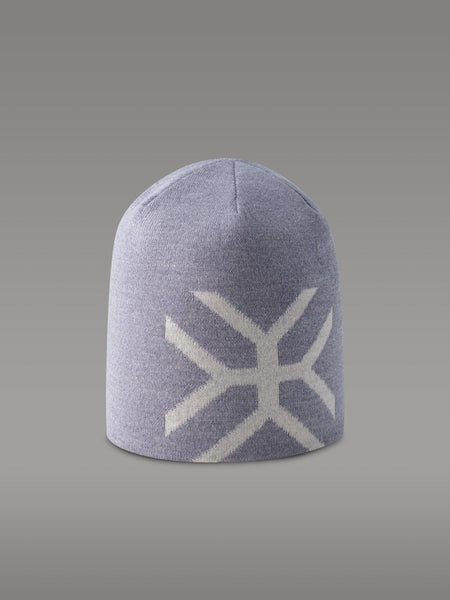
- DAMMA (see): 100% merino wool beanie, simple, warm, versatile, obvious in such an environment.
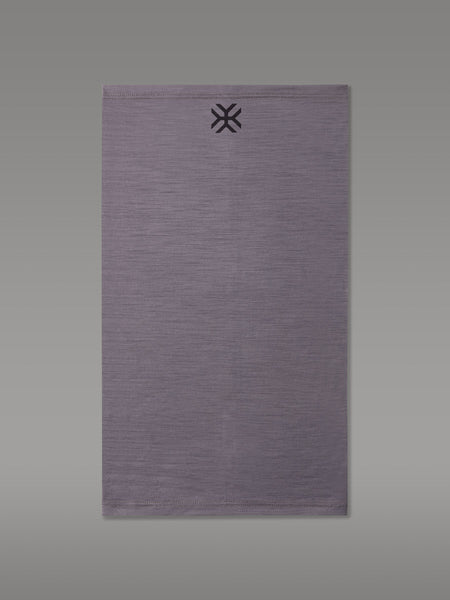
- LOBBIA (see): 100% merino wool neck warmer, valuable as soon as the wind came from the front or the thermal sensation dropped.

5. Why this type of equipment really matters in Nordic skiing
On winter trekking, especially on a route like the Kungsleden, the right equipment is not just used to withstand the cold. It allows you to manage the succession of micro-situations: starting cold, gradually warming up, accelerations, breaks, exposure to the wind, settling back into warmth. A jacket that is too closed up saturates. An intermediate layer that is too heavy overheats. Bottoms that are insufficiently protected let the wind wear down the legs over time.
The clothes used here mainly showed their coherence as a whole. The combination of SHIRWALI, KOKANEE, SKORA, and NUNATAK allowed protection to be easily adapted according to the pace and exposure. This is what matters over several days: not to suffer your layers, but to be able to make them work together.
6. A mountain experience, not just a trip
This crossing was nothing like a simple tourist parenthesis. It was rather a complete immersion in a sober, vast, demanding winter mountain. The silence, the lack of network, the regular friction of the skis, the measured weight of the pulka, the very particular light of northern Sweden: all this composes an experience deeper than a simple succession of landscapes.

What the photos do not convey well is precisely this density. The sensation of moving forward for a long time in an immense space. The way the wind reshapes the terrain. The healthy fatigue of a clear day. The constant attention to the weather. And that moment, at the end of the stage, when you finally take off the damp layers to regain some stable warmth.

7. A brand from the Jura in the Great North
There was also, in this adventure, a more discreet but real dimension: that of wearing a brand from the Jura all the way into the reaches of Swedish Lapland. Seeing these pieces evolve in a setting for which they were designed, noticing their appropriateness on the ground, sparking questions even in the most remote refuges: this gives the experience a particular scope.

On a route like this, clothes tell nothing on their own. They accompany. They protect. They allow you to continue in good conditions. This is exactly what is expected from well-designed mountain equipment.

Photo credit: Benjamin Becker